The château de Pintray and its
vineyard grounds
The Pintray site has almost always been occupied -
there was already a settlement here in gallo-Romain times. But let
us go back to the era when the site was first referred to in written
documents.
The Château…
The
Pintray Manor has been mentioned since 1467. the fiefdom then belonged
to a merchant draper named Pierre pelé, and was part o the
domain of Roche Chargé.
There is a description of the Pintray in 1547 which
then consisted of "houses, a barn, cattle sheds, a dovecote,
a rabbit warren, vineyards, arable and uncultivated land, copses,
bushes and thickets".
In 1578 the manor house belonged to François
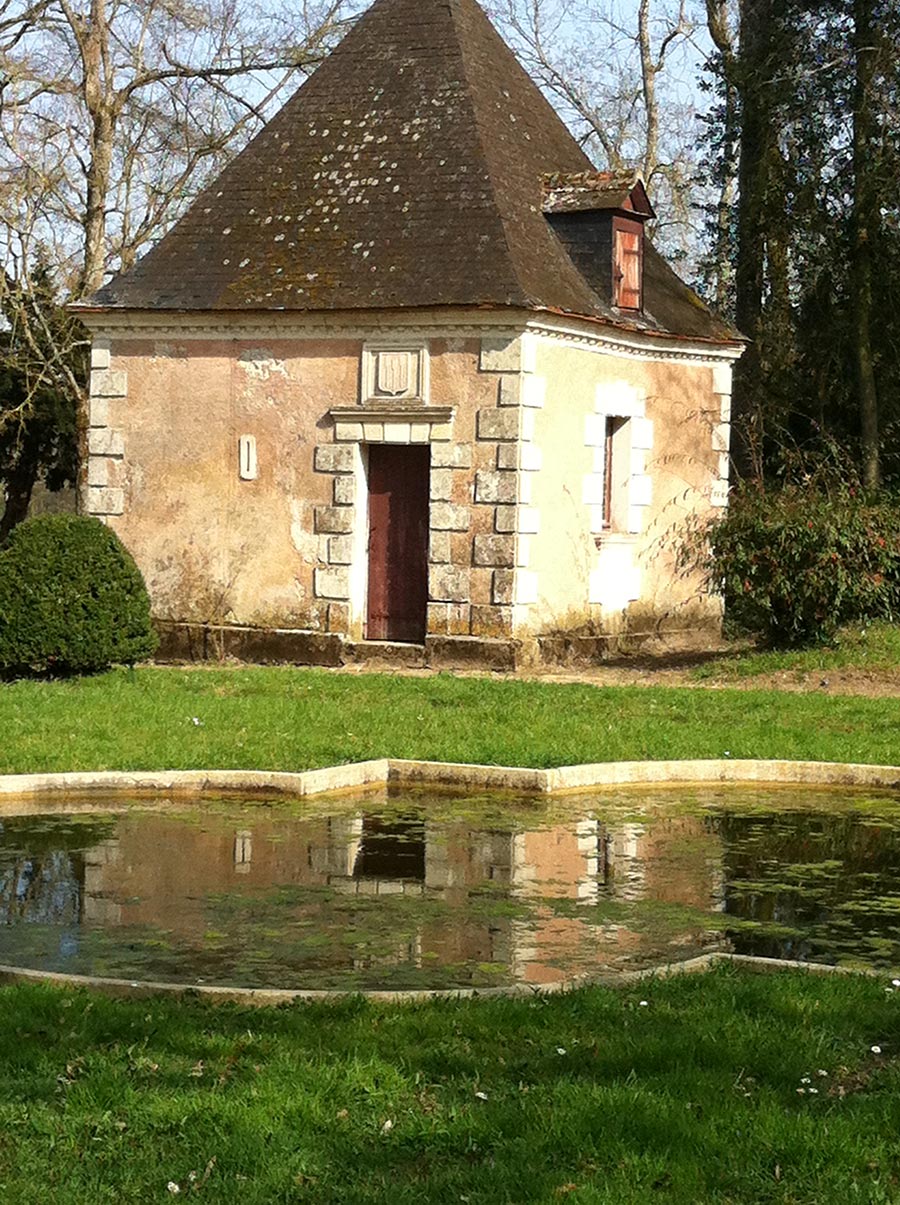
Pain and his wife. Their coat of arms can be seen on the pediment
of the chapel, one of the two pavilions that can still be admired
today.
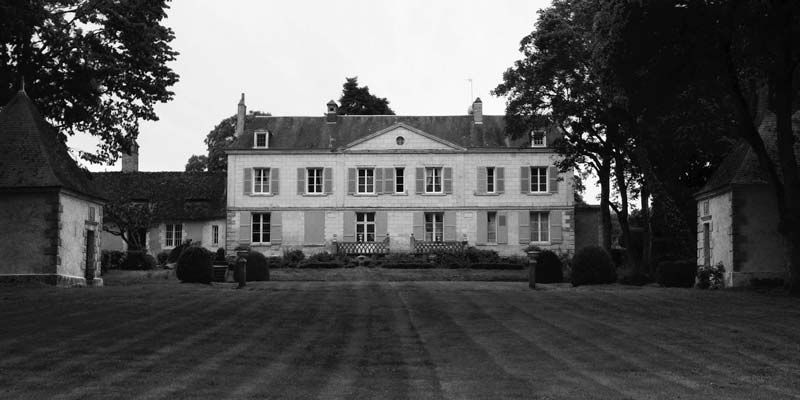
But it was Olphan du gast, the master huntsman responsible for waters and forests,
who built the château in about 1612. The Pintray therefore became a meeting
place in the Forest of Amboise during the reign of Louis XIII. The ground floor
with its alternate bossages dates from this time. The term "bossages" describes
the ornamental stone projections on the façade of the building. The
first floor did not exist at this time. The chapel also dates from this era
and consists of a square pavilion with angled bossages and a small octagonal
bell tower. The du Gast family were to keep the Pintray for 150 years.
In 1744 the château was acquired by Claude-françois de la Noue.
In 1768, in turn, his widow sold it to the Duke of Choiseul, a French Peer
and Prime Minister to Louis XV, who owned the nearby Château de Chanteloup.
There, the highly civilized Duke lived in magnificence surrounded by his court,
and held great festivities.
Before leaving her property, the widow of la Noue had the chapel bell moved
to the chapel of Saint-denis in Amboise.
The Duke of Choiseul was not to keep the Pintray estate
for very long, and he sold it to Luc Alen, a brigadier of the king's
army and a major in the regiment of Lally-Tollendal, at whose side
he fought wars in India.
During the revolution, the widow of Alen "publicly recognised as an aristocrat" was
imprisoned at Amboise. The château and grounds of the Pintray were declared
to be the property of the state, and were described on the fifth day of the
April/May survey in Year II of the Tepublic as follows :
"We entered a large main buiding
situated at the Pintray...comprising a kitchen, an office, a room
for
unloading
at the side, a drawing room, a closet for fruit, a bedroom, a servant's
room at the side, a small entrance corridor facing steps leading
up to the loft and a room in the mansard roof, a large room with
a glass door leading to the garden, a small corridor facing another
staircase likewise leading up to the loft and room in the roof,
another large room with a fireplace, a small side room, an attic
and two garrets all covered with slate, a garden area of about
2500 square metres enclosed by walls adorned with fruit trees,
a door leading to a south-facing vineyard, a small slate-covered
pavilion ot the corner of the north/south garden wall, latrines
in the other corner, a north entrance door closed by a wooden gate
with an area facing the building and fertilized at present with
hemp, which is half-quartered to contain an east-facing pavilion
with an attic, and a west-facing pavilion previously used as a
chapel - all of the buildings are roofed, partly with tiles but
mostly with slate."
The value of the property was estimeated at 2500 pounds, not
including outbuildings or the grounds. The outbuildings included
several cellars and a large barn in which there was an enormous rotary
wine press, ustensils and vats. One of these vats had a volume of
25 casks (about 5575 litres). The domain's dedication to wine production
was thus confirmed.
The Pintray still did not have a first floor. It was built in 1829, giving
the château its present-day appearance.
.…The vineyard grounds
The Pintray is actually an ancient site of vineyards.
It was the monks of saint martin of Tours who extended cultivation
aroud Lussault. françois Ierand later Henri IV
enjoyed the wine from the surrounding hills whenever they visited
the Château de la Bourdaisière.
An 18th century plan shows that the Pintray was partly arable land (represented
by the letter T), and partly vineyards (the letter V).
From the end of the 16th century, the nearby River Loire enabled the local
wines to be shipped to Nantes and then north to the countries of England and
Holland. Following the opening of the Orléans Canal in 1692, part of
the production went to Paris which was a major wine-consuming market.
Since 1937, the grounds of the Pintray have been part of the A.O.C. of Montlouis
sur Loire. The delicate and mellow character of its white wine is appreciated
by all. The particular flavours, fruity and mineral, make this an exceptional
product.
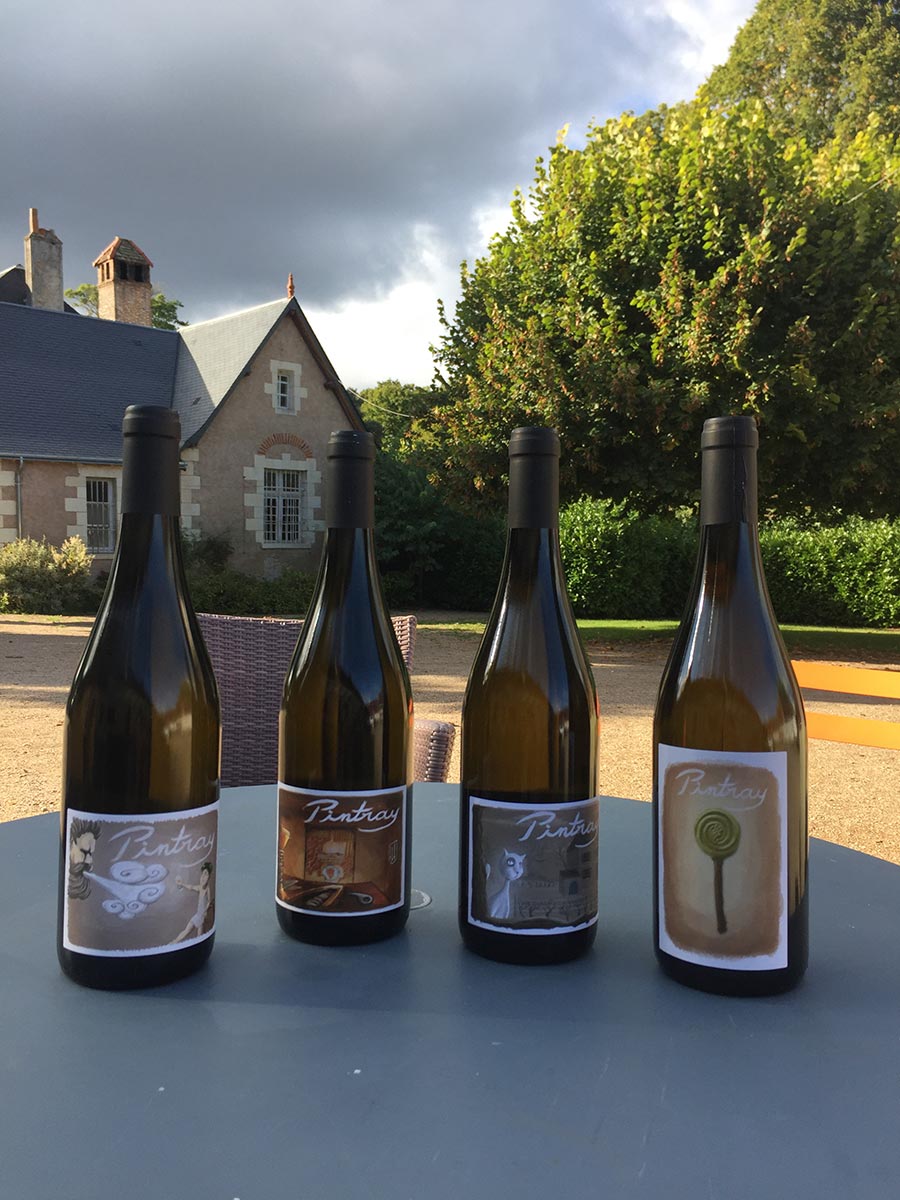
As owners of the Pintray since 1990, Maryvonne and Marius Rault are maintaining
this great tradition.